


 2025-07-24
At BOR 2025, László Mészáros, estate director at Disznókő, will share his insights on one of the world’s most iconic and often misunderstood wine styles: Tokaji Aszú. In this interview, he reflects on market challenges and connoisseur loyalty, the role of terroir-driven expressions like Kapi, and why Aszú deserves to be appreciated on its own terms—beyond sweetness, and far beyond dessert.
When you became director, the high-end sweet wine market was in a challenging place. From your perspective, have those conditions changed since the early 2000s?
Not really. The sweet wine market is still challenging, although I think the proportion of great Tokaj wines has increased, particularly in Asia and in the fine dining sector. On the other hand, this more ‘niche’ market is probably less affected by the current wine consumption crisis. We do hope that great sweet wine aficionados are more loyal.
Tokaji Aszú is famed for its longevity. Do you need to approach the question of drinkability now versus age-worthiness when crafting these wines?
When we decide on the vinification, ageing and blend of our Disznókő Tokaji Aszú wines, we make them to be age-worthy. As we have been making these wines since the 1990s, we can offer Aszú wines of different ages to the market.
And also, our sweet wine range is wide and complex, and we have wines that are beautifully fresh and open in their youth, like a Late Harvest. We also have other Aszú wines sold under different blends than Disznókő (Sárga Borház, Hattyús), with more aromatic and youthful expression, made of a higher proportion of more aromatic grapes as Hárslevelű and Zéta, and not just Furmint, which is the highly predominant variety for the Disznókő Aszú wines.
At Disznókő you’ve bottled single-vineyard Tokaji Aszú called Kapi. How has the market responded to these terroir-specific sweet wines?
The response from the market and the professionals was the most positive. It is a collection item; when we present a new release, it creates great enthusiasm among wine lovers, collectors.
It is a wine that, with its transparency, purity, allows the terroir to shine through. So far, we have released vintages from very different profiles, but connoisseurs will always find the line that is strictly linked to one of the greatest Tokaji sweet wine terroirs.
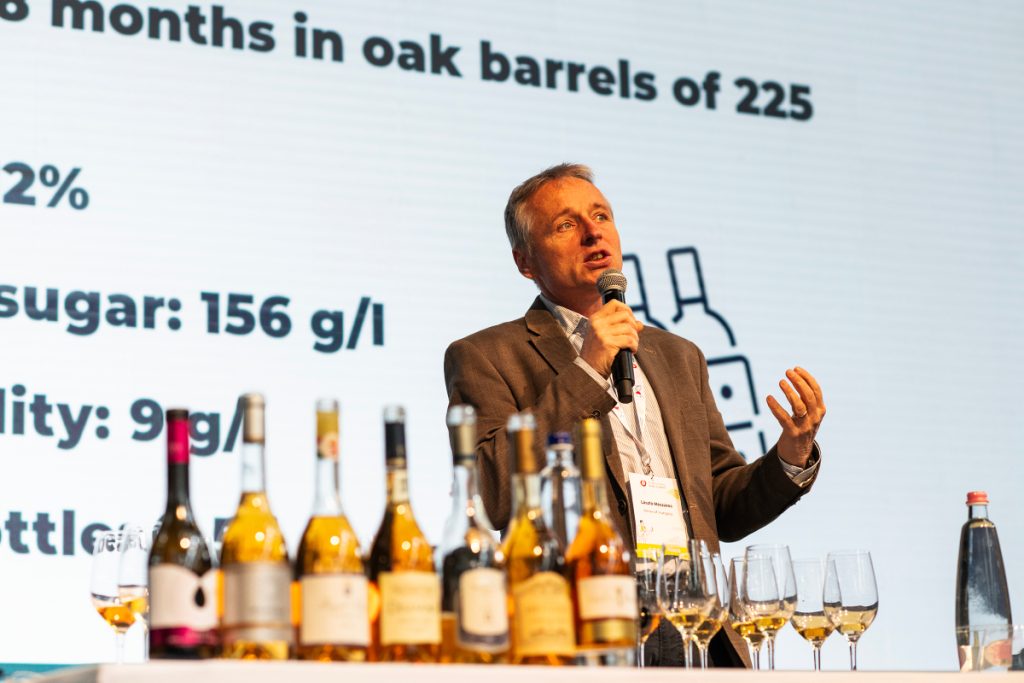
At BOR 2025, you will be presenting a masterclass on Tokaj sweet wines. What key message or experience do you hope to impart to the international professionals in attendance?
The unique yet universal character of Tokaji Aszú.
You’ve often emphasised that Tokaji Aszú shouldn’t only be seen as a dessert wine. What concrete steps can producers take to shift this perception in the market?
I think targeting young people is key. They fall in love with it at first sight. They become even more committed to these wines the more they find out about them. They can drink them with food or enjoy them on their own.
Finding good food pairings is always inspiring. Sommeliers and chefs have the imagination to pair our aszú wines with incredible dishes. On the other hand, enjoying a glass of Tokaji aszú on its own is a unique experience in itself. You shouldn’t just consider it a sweet or dessert wine. It is what it is, Tokaji Aszú is a category in itself, and if it is good enough, you won’t notice the sugar.